Investing Talks
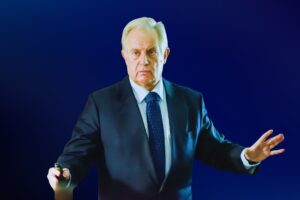
Name: Jorge Vasconcellos e Sá
Age: 72
Country of birth: Portugal
City of residence: Malveira da Serra
Biographical note:
Jorge Vasconcellos e Sá specialises in management and strategic marketing, with advanced training from leading international institutions, including an MBA from the Peter F. Drucker Graduate School of Management and a PhD from Columbia University in New York.
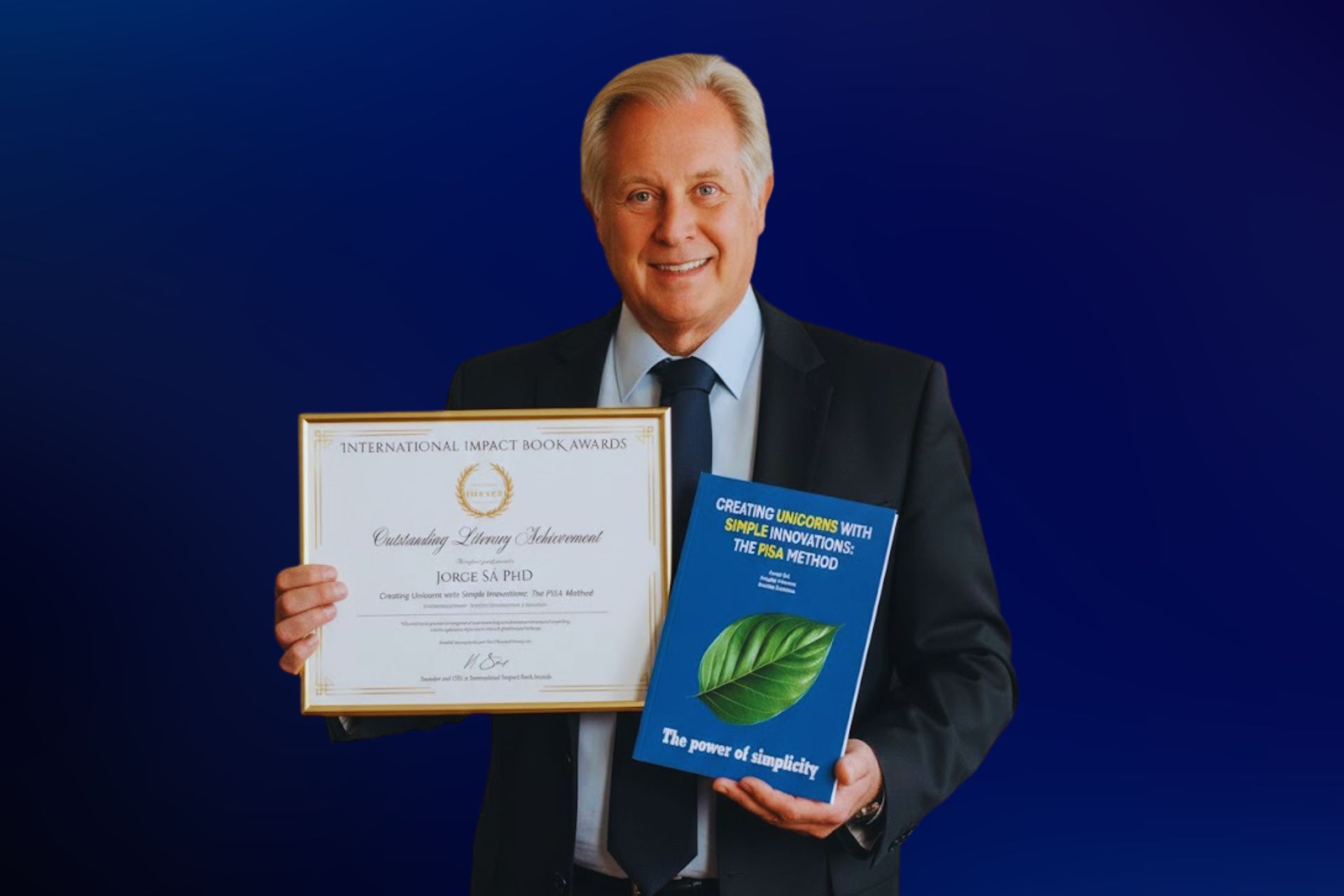
His academic research has resulted in the publication of five books and several international scientific articles in the fields of management, economics and strategy. His most recent book was honoured at the International Impact Book Awards and was a finalist in the Goody Business Book Awards.
Throughout his career, he has worked with renowned multinationals and organisations such as Coca-Cola, Deloitte, KPMG, Vodafone, Microsoft, Volkswagen, Pfizer, BP and McDonald's, among many others, in consultancy, executive training and management roles.
An international speaker, he has taken part in events and seminars at institutions such as London Business School, Oxford, IESE, Manchester Business School and George Washington University.
His work and books have been recognised and recommended by some of the world's leading management figures, including Peter Drucker and Philip Kotler.
Professor Jorge Vasconcellos e Sá, what moments in your career have most influenced your view of business strategy?
When I was a student of Professor Peter Drucker, the founder of modern management.
What led you to dedicate yourself to the area of strategy and competitiveness?
It was a process of successive approximations.
From engineering to economics. From economics to management. From management to strategy.
How has strategic management evolved in Portuguese companies over the course of your career?
There are two answers, but in both cases from bad to worse.
The short of it is that initially many managers didn't know what they didn't know (unconscious ignorance). Now they think they know, but they don't (which is worse).
Then there's the long answer of why the gap between knowledge/“state of the art” and practice is not only large, but has been growing.
Research has brought progress, but practice has not kept up for two reasons.
In many companies, managers have no management training. They are engineers, lawyers, etc. The prevailing idea is that management is about being nice, motivating staff and little else.
Take hospitals (public and private). Lots of money. Good doctors. Bad management. They're not managers, they're administrators who push papers around.
Secondly, when managers take a management course, they don't know the strategy because you can't teach what you don't know.
The speciality of many strategy professors is... physical chemistry...: “strategy is about having a vision... predicting the future (!?)... ensuring the coordination of marketing with operations and finance...”
They are still in prehistoric times (and in the age of chipped, unpolished stone).
They don't know the basics. Strategy comes from military art: where attack the enemy (competitors).
Which in management corresponds to 1) the choice of geographical areas, 2) (within those) the choice of industries and 3) (within those) the choice of segments.
As opposed to tactics, which in both military art and management are concerned with how: how to advertise? how to finance the company? how to hire and motivate human resources? How. How. In the nine functional areas.
The where (strategy) and the how (tactics) are equally important. Which is the most important wing on an aeroplane or the wheel on a motorbike?
And the choice of the best strategy (geographical areas, industries and segments) depends on three variables:
- Attractiveness (customer volume, margin and growth rate);
- Competitive position (strengths and critical success factors); and
- Synergy.
In most companies, the question of whether the strategy is good or bad doesn't even arise. It's not even clear. It's not categorised where no bet. There are no priorities without posterity.
"It's not those who walk the furthest who make the most progress, it's those who think the most.
Strategy is about applying scarce resources (money, time, energy) to the greatest opportunities.
A strategist is someone who transfers resources from where they are least to where they are most productive."
Is property a sector of opportunity or strategy?
My dear friend, the role of strategy is precisely to make it possible to distinguish between opportunities and distractions.
An opportunity is a distraction where we have a competitive advantage and synergy.
A distraction is an opportunity (due to the lack of the top one) for others.
Often the best deals are the ones you don't make.
Winning is choosing your battles.
What are the most common strategic mistakes in property development?
Boy... (excuse the French) he's making a lot of money on that...
And off I go...
If I don't do better than him (due to competitive advantage and/or synergy) at best I'm left with customer waste. I often exhaust myself ingloriously. And at worst I lose money. In any of the three cases there is always an opportunity cost, i.e. I would be better off doing something else (another type of project).
Those who make the most progress are not those who walk the most, but those who think the most.
Strategy is about applying scarce resources (money, time, energy) to the greatest opportunities.
A strategist is someone who transfers resources from where they are least to where they are most productive.

How should risk be assessed in a property project today?
Who is the customer?: purchasing power, (regardless of the previous one) stage in the life cycle (young married couples, couples with children, pensioners), nationality (British who only see the sun for three months a year and there are already almost 50,000 of them here in Portugal or from another origin?).
What is value for the customer: price, or accessibility (and not spending two hours a day there and two hours a day here on the IC19), or the pleasantness of a villa with a small garden in a quiet and safe area?
Where is the customer: on the social networks of former university students exchanging information about jobs, marriages and houses, or on the A5 stopped in traffic reading billboards, or on the social networks of French expats (in Portugal there are already around 30,000 due to antisemitism)?
There are other questions, but these three (who you are, where you are and what you value) are fundamental to ensuring two other things: 1) what you produce is in demand and 2) you know how to attract it.
What turns a property project into a long-term asset?
Focusing on a market segment (e.g. crossing social class with life cycle stage with geographical area with nationality) that not only has numbers and purchasing power, but also growth prospects.
Put another way: does everything indicate that past growth will continue into the future? That the past is prologue?
Among others, the middle and upper-middle classes of Brazil and Angola? Or second homes for the French, English and Irish? Or? What tends to grow?
What trends will transform real estate in the coming years?
It depends on the government's immigration policy.
Portugal can be a dormitory for the third world or a second home for rich countries. A ghetto or the Florida of Europe.
How should developers anticipate new ways of living and working?
The resistance to mobility. Because of the cost (in time) and growing inconvenience (due to an ageing population).
This has an impact on both houses and urban planning.
What makes Portugal attractive for property investment?
The immigration policy, the sun, the (still relative) safety, the beauty of the country and the low (compared to richer countries) cost of living.
Only the sun is guaranteed to keep us going in the future.
What still limits the development of the sector in the country?
Bureaucracy.
That is, having people who have never worked in their lives setting rules for those who work and controlling those who work.
What opportunities do you see in Portuguese property today?
As I said before, if the government spoiling Portugal didn't get in the way, Portugal could be the Florida of Europe.
What advice would you give to a property investor?
Take a sheet of paper. Draw a rectangle on it. Divide this rectangle into squares based on relevant variables: social class, stage in the life cycle, nationality, etc.
And choosing the best squares in the overall balance of 1) high demand (quantity, purchasing power and growth), 2) low supply, 3) my company's skills, 4) synergy between segments and 5) an organisation that is as much as possible part of the solution rather than the problem.
If you could sum up the future of real estate in Portugal in one sentence, what would it be? Would you like to leave a message for the stakeholders in the property sector who accompany us on Investing Talks at Invest 351?
When T. Jefferson wrote the US Declaration of Independence, he initially listed three natural rights: life, liberty and property.
Only later did he swap the third for a search for happiness.
The house is the projection of the personality. We inhabit them and they inhabit us. Where time becomes intimate.
Nothing is more serious for a client. This is a great opportunity for those who work professionally.